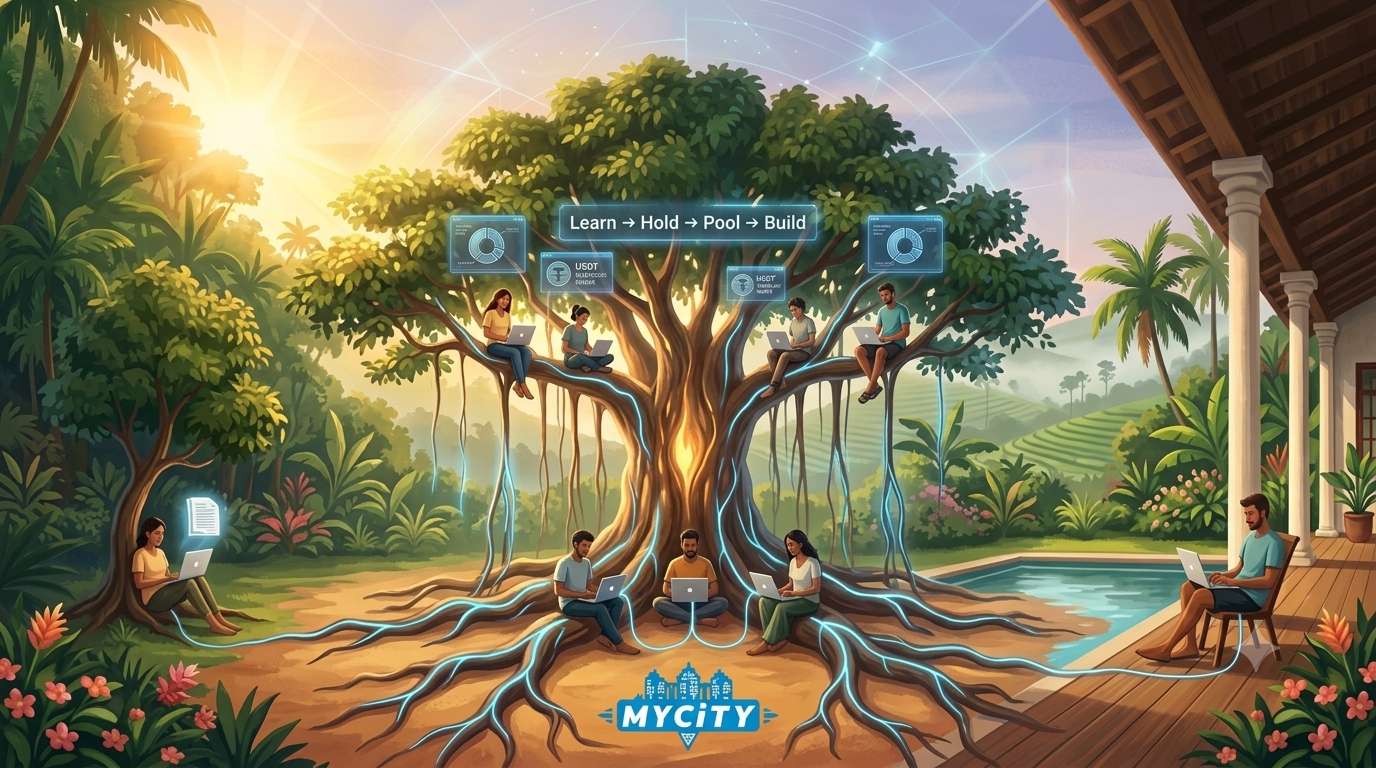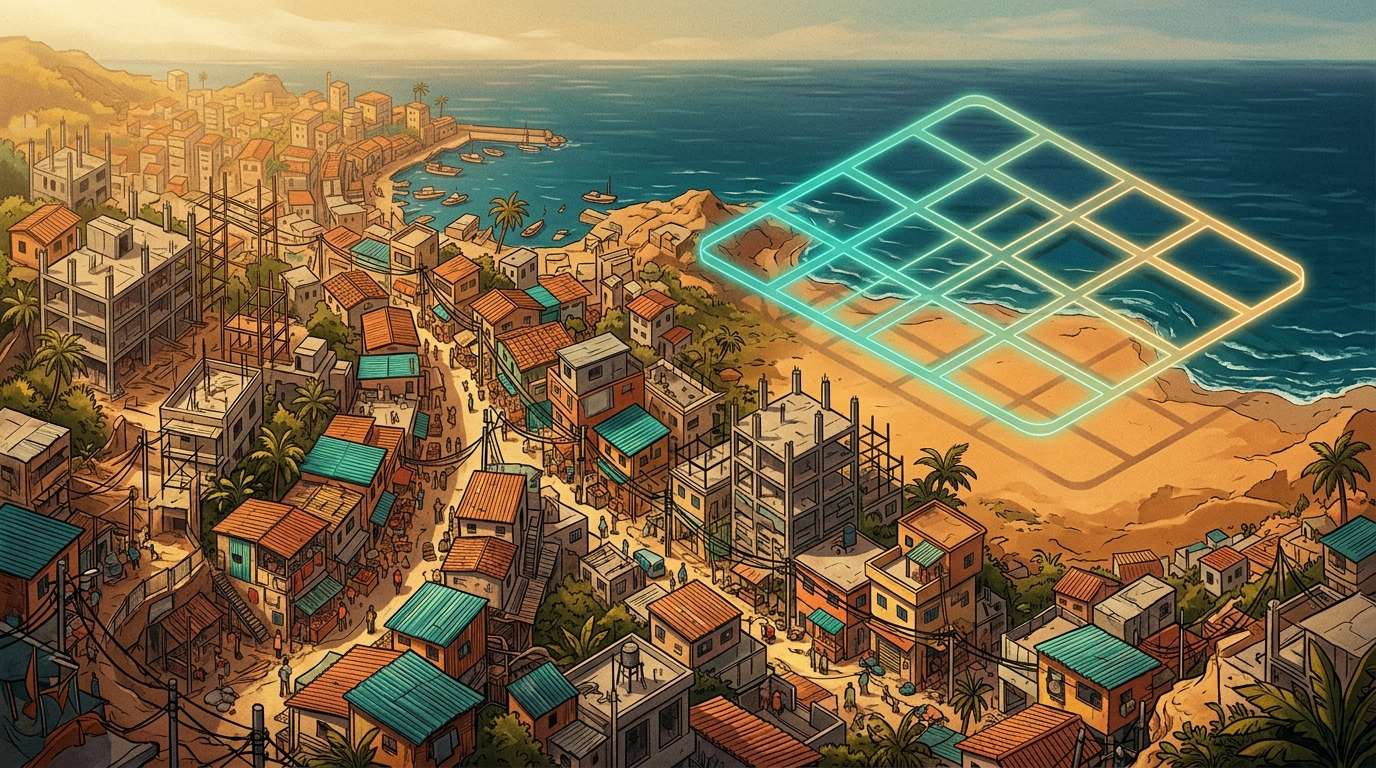
Most of the cities people live in today were never designed. They accumulated: a road here, a market there, a housing estate when land became available. This first post in the series looks at what that costs, and why it is the problem MyCity exists to address.
The scale of the problem
The United Nations projects that about two-thirds of the world’s people will live in cities by 2050. Most of that growth is happening where planning capacity and money are thinnest. UN-Habitat estimates that around 1.16 billion people already live in slums and informal settlements, about a quarter of the global urban population, and that the number has risen by roughly 279 million between 2000 and 2024 even as the share has fallen.
People in these settlements typically struggle to reach the basics: adequate housing, clean water, sanitation, power and waste collection. This is not a story about individual failure. It is the predictable result of cities that grew faster than the systems meant to serve them.
What “no plan” looks like close to home
Sri Lanka’s capital shows the pattern clearly. Colombo was built on marshland, which was gradually filled and drained to make room for the city. The wetlands that remain are the city’s main defence against flooding, because they absorb water that would otherwise flood streets and homes.
Over the last three decades, an estimated 40% of those wetlands have been lost, and they have continued to disappear at roughly 1.2% a year. Flood damage has been estimated at as much as 1% of the city’s GDP. Experts point to a familiar combination: building on wetlands, expanding informal settlements, drainage that cannot cope, and waste, especially plastic, that clogs the canals.
A caution on the numbers. The wetland-loss and flood-cost figures are widely cited estimates from consultants and news reports, not audited statistics. They are useful for showing the scale of the issue, and should be read as estimates.
The pattern goes beyond flooding. Reviews of Colombo note that water supply, sanitation, storm drainage, wastewater treatment, waste management and road maintenance have not kept pace with growth, and that the siting of businesses without planning feeds traffic congestion. Each problem has a local cause. Together they have one source: no one was responsible for the whole picture.
Why it keeps happening
It is tempting to blame bad decisions. A better explanation is structural. Most urban decisions are made one at a time, by different bodies, with different budgets and different time horizons.
- No single sequence. Roads, drainage, housing and power are approved separately, so they rarely arrive in the order a city needs them.
- Funding comes from outside. Infrastructure is financed by distant bodies, so priorities follow the funder, not the people who use the place.
- Users have no say. The people who live with the result are rarely part of the decision, so there is little ownership and little care.
- No public record. When no one can see what was decided and why, mistakes repeat.
What a plan actually has to include
A plan is not a drawing. A drawing shows what a city could look like. A plan decides the order of things, who pays, who owns, who decides, and how anyone can check that it is being followed.
Where MyCity fits
MyCity does not claim it can redesign Colombo. It starts smaller and earlier: a model for how a new piece of a city is planned, funded, owned and recorded, built in the open so that others can copy it. The rest of this series explains that model one step at a time, starting with how Sri Lanka itself solved a version of this problem two thousand years ago.
Key takeaways. Cities that grow without a plan carry costs that keep compounding. The problem is structural, not personal. A real plan decides sequence, funding, ownership and record, not just appearance.
Frequently asked questions
What is an unplanned city?
A city that grew through many separate decisions, without a single shared sequence for roads, water, housing and services. Informal settlements are the most visible result.
Why is Colombo often used as an example?
It was built largely on marshland, and an estimated 40% of its wetlands have been lost over three decades, which is linked to recurring flooding. Figures are estimates from consultants and news reports.
Does MyCity claim it can fix existing cities?
No. It offers a model for planning, funding, owning and recording new pieces of a city in the open, so others can copy it.
Sources and further reading
- UN: The evolving landscape of human settlements
- Eco-Business: World’s slum populations set to surge
- AsiaNews: Flooding in Colombo aggravated by human activity
- WWT: World Wetlands Day, a countdown from Sri Lanka
- Daily FT: Govt. must ensure sustainable urbanisation
Continue the series
- Next: What Sri Lanka Already Knew About Building Cities
- All parts of the P2P Pool Guide
- Related: The MyCity Model and Decentralized Ownership Model
Part 1 of 10 in the P2P Pool Guide. This series explains a design. Joining is not open yet, no returns are promised, and nothing here is investment advice.