
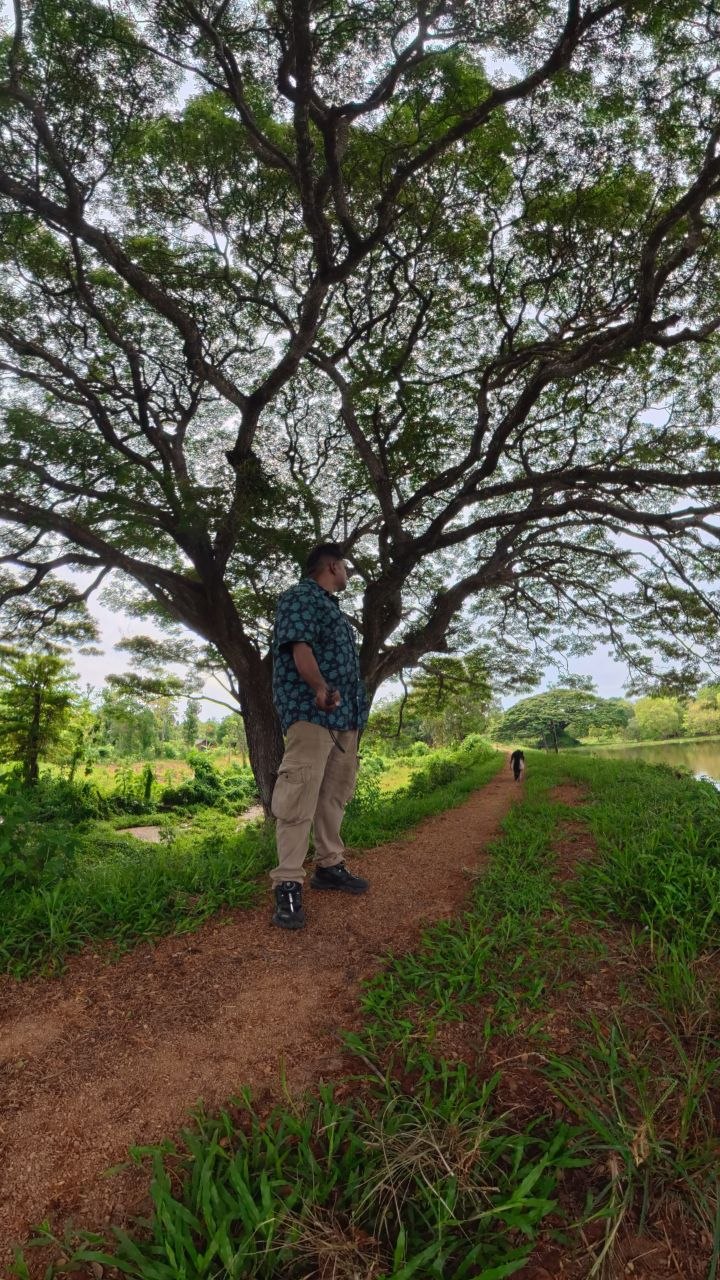
Markets taught me how money moves. People taught me how cities work.
I'm Chamara. Born in Negombo, raised across four countries, and drawn to financial markets long before I knew the word for it. I'm a digital nomad based in Sri Lanka, and I started MyCity because the infrastructure my own community needed didn't exist.
My path ran through a trading floor in Dubai, a hosting company in Dubai Internet City, and almost every kind of job you can name. But the work that shaped MyCity most was quieter: years of studying how people behave inside the systems around them, and why centralized systems keep failing them. Today I design, build and run MyCity myself, and I work directly with Sri Lankan businesses on their websites and search visibility, so the places nomads love can be found without anyone handing over a commission.
I grew up around money in motion.
Finance was never a career pivot for me. It was the first world I paid attention to, and everything I've built since carries its fingerprints.
- Childhood
A grandfather at Mercantile Investments
My grandfather worked at Mercantile Investments. That small window into his world was enough. Investments, companies and the idea that capital could be put to work became familiar long before they became a profession.
- Age 16
Yahoo Finance, my English classroom
Back in Sri Lanka as a teenager, I didn’t know where else to go and read, so I browsed Yahoo Finance and turned it into my practice ground for English. Words like charts, tickers and stock market were familiar on the screen, but I didn’t truly know what they meant. I learned the language of markets and the English language at the same time, one new word at a time. Even then, I had the mind of a hedge fund, with no idea yet how to get there.
- Dubai
A trading floor, and Dubai Internet City
In the UAE I had the chance, for a brief while, to work and learn as a junior trader on a professional trading floor, surrounded by Reuters 3000 Xtra terminals and the speed of institutional markets. I arrived with zero knowledge of that world, and absorbed as much as I could. Years later, I applied to beta test Eikon, the platform that replaced it.
Alongside that, I was an IT support apprentice at one.com, a web hosting company in Dubai Internet City. For a month I handled live chat support, seeing how internet and hosting infrastructure works from the inside. Markets on one side, the web on the other. That combination is where MyCity was born.
- 2007
Home to build a team, not to stay
I came back to Sri Lanka with a plan: work with friends and family who shared the vision, put the trading software I’d been exposed to in Dubai to use, and eventually return to Dubai together as traders. The original MyCity logo dates from this year: a dynamic human figure rising beside three candlestick bars, the last one an engulfing candle. People and markets in one mark, from the very start.
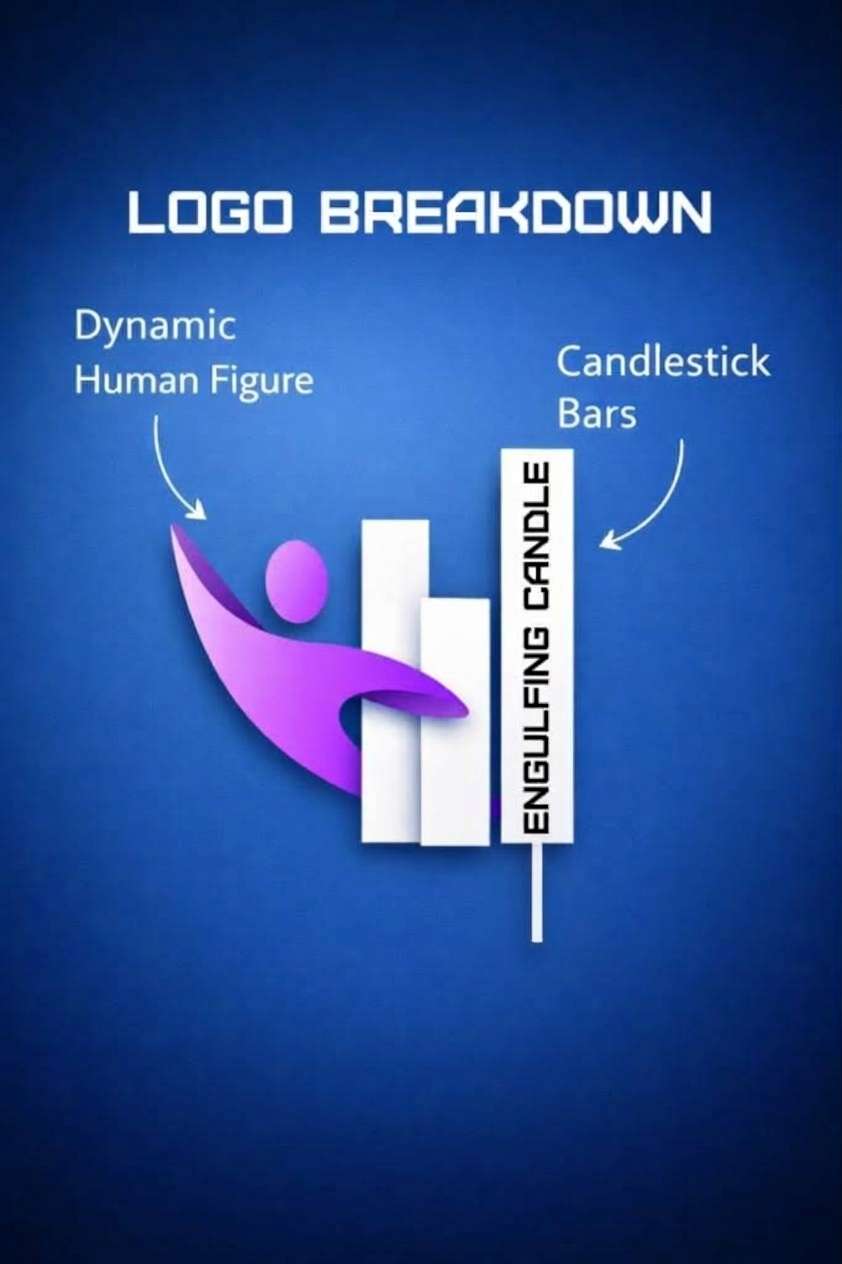
// The 2007 MyCity mark, decoded - The turn
From leaving Sri Lanka to building in it
Things got more complicated than the plan. In my mind, everything I’d seen in the UAE was possible in Sri Lanka too. It wasn’t: even moving money in and out of the country came with limits I hadn’t realized existed. I had to learn how society here really works, and that study became the real work of the next two decades. The more I understood, the more I pushed in a different direction. Instead of going back to Dubai, I started asking a bigger question.
- Today
Futures trader on Binance
The skill I put on hold to do the research first is now part of my daily work. Today I trade futures on Binance, closing the loop that started on Yahoo Finance and a trading floor in Dubai.
“How do I build something here that is as inspiring as Dubai Internet City?”
The question MyCity has been answering since 2008
The real research wasn't on charts. It was on people.
Trading taught me to read patterns. Coming home taught me that the hardest systems to read are human ones.
Infrastructure I never had to notice
As a child I saw roads, transport and public services that simply worked. I never once saw someone sleeping on the street. Poverty was something I didn't know existed.
The total opposite
Back in Sri Lanka as a teenager, I saw people sleeping by the roadside for the first time, and infrastructure that lifted some people while leaving others behind.
“Why did I get to grow up on the developed side of the world, when so many people here never get that chance?”
That question never left me. Everything on this page, from the trading floor to MyCity itself, grew out of trying to answer it.
When I looked at centralized systems and the way our cities are built, I didn't only want to know what was broken. I wanted to know why centralized infrastructure keeps failing the people it's meant to serve, and the answer wasn't purely technical. It was psychological: how people trust, cooperate, compete, and give up.
So I started an independent study, with no institution and no funding, just attention. First the people around me, in every job and neighborhood I passed through. Then the people I recruited or tried to build with: who stayed, who drifted, what held a group together and what quietly broke it.
The people around me
Family, coworkers, customers, neighbors. How people really behave when systems work for them, and when they don't.
The people I build with
Every team I recruited or tried to work with became a live experiment in motivation, trust and shared ownership.
A city around real behavior
MyCity is designed from how people actually interact, not how a central planner assumes they will.
MyCity isn't drawn on a whiteboard. It's built from nearly two decades of watching how people live, work and cooperate, and why the systems around them so often let them down.
Most people climb toward success. My choices took me to the bottom.
I couldn't design cities for every level of society without living at every level of it.
To understand what really happens inside each class (the wealthy, the middle class, the working class and the poor), I had to stand in those shoes myself, not read about them. No shortcuts: self-taught and self-sufficient the whole way.
Not every step was planned. But every choice I made shaped where I ended up, and I always had the option of a different path. Those choices led me into poverty, and from inside it I finally understood why poverty exists, and why its loop is so hard to escape.
For years I barely told anyone I had a trading background. I had the exposure, I knew the path was there, and I could have started long ago. I only truly mastered trading recently, and only now trade futures on Binance, because I had to choose what came first. For twenty years, one question sat in the back of my mind: why do anything else, when I know what trading can generate? The research was always my answer.
Trade first, get wealthy
The faster, more comfortable road. But from up there, I would never have seen life from the side of the people living in poverty.
Research first, live it
To understand poverty, I chose to live in it and experience it myself, and to leave wealth for later.
Getting out of poverty isn't impossible. But it isn't only financial. You're pulled back psychologically, emotionally and spiritually, often by the very people you hoped would lift you up.
Family
The people closest to you can be the first to hold you in place.
Friends
Circles that share a struggle can resist anyone who tries to leave it.
Colleagues
Workers pushed to compete with each other instead of rising together.
“I couldn't build for the top of society without first going to the bottom.”
Why MyCity is designed the way it is
Coming out of poverty is the hardest part.
I'm in the middle of that climb right now. When I make it out, anyone living through something similar will be able to see the whole path: the choices I made, what they cost, and how I came back.
Poverty isn't only a lack of money. It's conditioning, and conditioning can be unlearned.
The poverty mindset
The scarcity mindset
Discipline
Most platforms try to solve a human problem from the outside. MyCity starts from the inside: understand poverty fully, then build cities with people who may begin in poverty, and help them out of it for good, and lift the minds of everyone who has walked a road like mine.
When people doubted the vision, I left a record instead.
Since my teens, I've talked about and built around ideas most people around me couldn't place. I never called myself a visionary. I didn't even know the word applied until someone else used it for me. Growing up between languages, I also lacked the English to explain what I saw, so my ideas were often met with doubt.
People projected who I could or couldn't be, rather than asking who I wanted to become. In a developing society, thinking beyond what's expected often draws resistance instead of support, and proving myself over and over became exhausting. So I stopped arguing and started leaving markers that time could verify.
mycity.lk, filed under Economy
I registered the domain under the category of Economy on purpose. Long before anyone took it seriously, MyCity was an economic project.
“I am in Eikon service.”
Before it was called Eikon, it was Reuters 3000 Xtra, the terminal I first saw in Dubai. I had applied for the Eikon beta, and I posted this on purpose: so that people who couldn’t follow my explanations back then could one day return to it and see which industry I had really been in.
Four countries before sixteen.
I was born in Negombo in 1985 and spent my childhood moving from Sri Lanka to Singapore, then France, then Germany. Moving so often broke up my schooling, so I never had a conventional formal education. English, German and French all came to me mostly by listening, not in classrooms: a decentralized education, long before I had a word for it. I returned to Sri Lanka at around fifteen, which is when the contrast above first hit me.
German schools let me follow my own interests. Sri Lankan schools pointed everyone toward medicine, engineering or law. My curiosity didn't fit that path, so I built my own: computers, the early internet, peer-to-peer communities from 2001, and markets.
That freedom started at home. My parents never told me what to learn or who to become, and I never had to compete with anyone. I followed my curiosity instead. Had I not come back to Sri Lanka, I’m certain I would have gone into research and development, language barriers and missing qualifications or not.
I've worked more kinds of jobs than most résumés can hold. None of them were accidents. Each one was research: I wanted to know why someone chooses that work, and what it really feels like from the inside.
Carrying stacks of plates as a dishwasher, mopping floors, cleaning toilets: that work is harder than most people imagine. Doing it myself let me see the world from the perspective of the people who do it every day.
Later I spent years doing independent web design and SEO, and made viral videos for clients around the world, most of them through Fiverr. That work taught me how online businesses get found, and how much of their value gets taken by the platforms in between.
I never specialized in any one of these, and I never wanted to. Jack of all trades, master of none, but oftentimes better than a master of one.
You can't decentralize a city on top of centralized money.
Years of watching markets, and people, convinced me the order matters. Real decentralized infrastructure has to start at the money layer and build upward. Read the full picture in our vision.
That's why Bitcoin sits at the foundation of how I think about MyCity: a fixed supply, a public ledger, and ownership that doesn't need permission. Smart tokens and community ownership models are the layers that come after.
The physical side looks back before it looks forward. Sri Lanka's ancient tank cascades and village irrigation systems were decentralized infrastructure long before the term existed. MyCity's long-term vision is rural-first: sustainable settlements, shared water and energy, and global connectivity.