
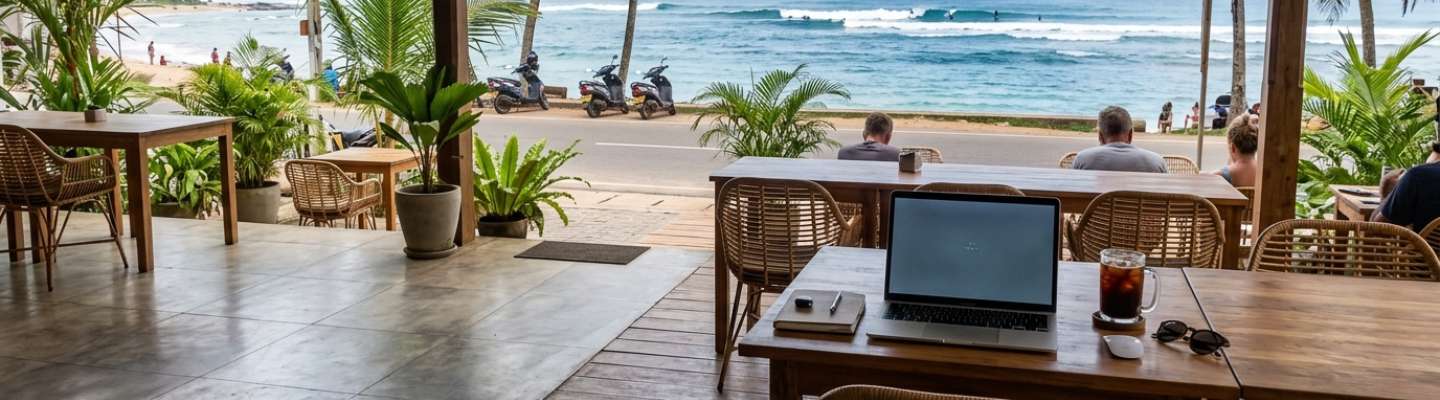
The town is in Galle District, between Galle and Weligama. It is smaller and quieter than Weligama, with fewer services but a strong café and long-stay villa scene that suits remote workers who want to settle in for a season.
// Why base here
Why remote workers choose Ahangama
- Reef surf. Ahangama, Midigama and nearby breaks suit intermediate and experienced surfers more than beginners.
- Café culture. Many cafés along the main road are set up for laptops, with good coffee and long hours.
- Long-stay villas. A large share of accommodation is built for stays of weeks or months.
- A quieter pace. Less traffic and nightlife than Weligama or Mirissa, while both stay within easy reach.
Look out for the stilt fishermen along this stretch of coast, one of Sri Lanka's most photographed sights.
// Where to work
Coworking in Ahangama
At the time of writing, these are well-known options. Check current hours and prices directly before you go.
- NETS Cowork & Colive: a combined coworking and coliving space on Mahavihara Road.
- Focus Hub: a café and coworking space opposite Ahangama bus station, with air conditioning and desks set up for work.
- Café Ceylon: a B&B in a century-old villa in Kabalana, across from a surf break, with indoor and garden workspaces open to non-guests.
We are building a verified directory of places to live and work. List your business to be featured, or browse places in Ahangama.
// Where to stay
Choosing where to live
Most stays line the coastal road or sit a short walk inland among the palms. Road-facing places are convenient but noisier; inland villas are quieter and often have better space for a proper desk. Ask about monthly rates, a dedicated workspace and backup power before booking.
// Getting there
Getting to Ahangama
- By road: take the Southern Expressway from Colombo, then the coastal road toward Weligama.
- By train: Ahangama is on the coastal railway line between Galle and Weligama.
- Locally: tuk-tuks and rented scooters are the usual way to hop between Ahangama, Weligama and Galle.
// When to go
Best time to base yourself here
The south coast is at its best from November to April, when the sea is calmer, skies are clearer and most cafés and guesthouses are fully open. From May to September the southwest monsoon brings more rain and bigger, messier surf, and some businesses shorten their hours. Prices for stays usually follow the same pattern: highest in December to March, lower in the wet months.
// Practical notes
Before you commit to a month
Power cuts and slow connections still happen along the coast. Before you commit to a monthly stay, ask for a recent speed test, check whether the place has fiber, and ask what backup power covers the router. A local SIM with a data plan is a sensible backup for calls. For a longer stay, read our Sri Lanka Digital Nomad Visa guide to see whether the visa fits your plans.
Ahangama rewards people who stay long enough to slow down.
It has fewer services than Weligama, but the cafés, villas and reef breaks make it one of the best places on the coast to settle in for a season.
// Common questions
Ahangama for digital nomads: frequently asked questions
-
Is Ahangama or Weligama better for remote work?
Weligama has more services, more coworking choice and easier beginner surf. Ahangama is quieter, with a stronger café scene, long-stay villas and reef breaks better suited to intermediate surfers. They are only about 20 minutes apart.
-
Where can I cowork in Ahangama?
At the time of writing, NETS Cowork & Colive on Mahavihara Road and Focus Hub opposite Ahangama bus station are well-known options. Check current hours and prices before you go.
-
Is Ahangama good for beginner surfers?
The reef breaks around Ahangama and Midigama suit intermediate and experienced surfers best. Many beginners take lessons on Weligama's softer beach break and move to Ahangama as they improve.
-
When is the best time to stay in Ahangama?
November to April is the dry, calm season on the south coast. May to September brings the southwest monsoon, with more rain and bigger surf.