
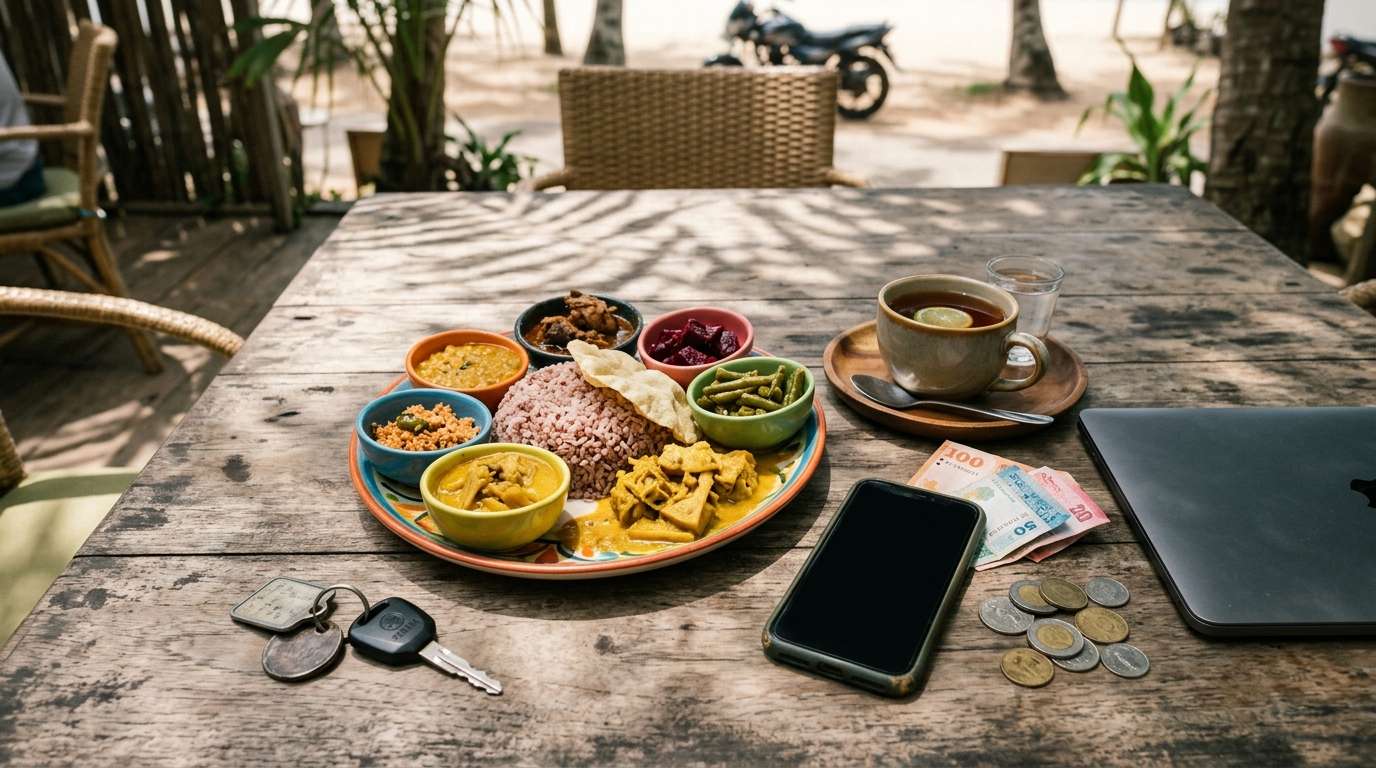
Sri Lanka's prices have settled since the 2022 crisis. Inflation has fallen to low single digits, and through 2026 the rupee has mostly traded at around LKR 310 to 335 per US dollar. For someone earning in dollars, euros or pounds, that makes it one of the most affordable places in Asia to live and work for months at a time.
The figures below are estimates for one person, compiled from public cost-of-living data and operator price announcements in 2026. Your own number depends mostly on two choices: where you live and how often you eat in Western-style cafés.
// The short answer
Three ways to live here
// The breakdown
Where the money goes each month
These ranges are for one person staying a month or more in a popular base such as Colombo, Weligama or Ella.
// Rent
Rent: your biggest line
Expect roughly US$300 to US$600 a month for a studio or one-bedroom with air conditioning in a popular south coast town or one of Colombo's residential areas. Simple rooms in guesthouses or in quieter towns can cost well under that. Villas, beachfront places and anything in the December to March peak cost more.
- Ask for a monthly rate. Many hosts discount stays of a month or longer, even if the listing only shows nightly prices.
- Check what is included. Electricity is often billed separately, and air conditioning can add a lot to it.
- Book outside peak season. On the south and west coasts, May to October is usually much cheaper than December to March.
Ask for a recent speed test, confirm the connection is fiber, and ask what backup power covers the router. A cheap room with unreliable internet is not cheap if you lose working days.
// Food
Food: cheap or not, your choice
Food is where budgets split most. Rice and curry, kottu and hoppers from local eateries cost very little, often only a dollar or two. A smoothie bowl, flat white and avocado toast in a café built for travelers can cost several times that, close to what you would pay at home.
Most remote workers settle into a mix: local lunches, a few café meals a week, and groceries from supermarkets and markets. Imported goods such as cheese, wine and branded cereals are the expensive part of a grocery bill.
// Work setup
Coworking, internet and mobile data
- Coworking: a monthly hot desk in the main nomad towns runs around US$100, with day passes available at most spaces. See the coworking sections of our Weligama and Ahangama guides.
- Home internet: fiber is common in Colombo and the bigger towns, and patchier in small villages. Budget for it with electricity if your rental does not include it.
- Mobile data: cheap and a sensible backup. SLT-Mobitel has announced a 30-day tourist plan with 30GB for LKR 1,540 and an unlimited 30-day plan for LKR 5,131. Dialog also sells tourist packs. Check current prices with the operator before you buy.
// Getting around
Transport: from buses to scooters
Public transport is very cheap. Trains and buses link most of the places nomads live, and our budget transport guide covers fares and routes. Tuk-tuks and ride-hailing apps are easy for short trips. Many long-stay remote workers on the south coast rent a scooter by the month, which is often the single biggest transport cost and also the most convenient option.
// Easy to forget
Costs people leave out of the budget
- Health insurance. International cover that works in Sri Lanka, which the Digital Nomad Visa requires.
- Visas. Tourist visa extensions, or US$500 a year for the Digital Nomad Visa.
- Card and ATM fees. Foreign cards often carry conversion fees and ATM charges, so it pays to check your bank's terms.
- Air conditioning. Running it all day can noticeably raise an electricity bill.
- Weekend trips. Safaris, whale watching and train trips to the hill country add up quickly.
// The visa math
How the budget fits the Digital Nomad Visa
The Digital Nomad Visa requires you to remit at least US$2,000 a month into Sri Lanka. That is comfortably above what most people need to live here, so the visa's income test is about proving stable foreign earnings, not about forcing you to spend more. Many visa holders live on the comfortable budget above and save the rest.
Sri Lanka is affordable, but where you live and what you eat decide your real number.
Pick your base outside peak season, negotiate a monthly rate, check the internet before you commit, and eat like a local most days. Do those four things and US$1,000 to US$1,500 a month buys a very good life.
// Common questions
Cost of living in Sri Lanka: frequently asked questions
-
How much does it cost to live in Sri Lanka per month as a foreigner?
Most remote workers spend roughly US$1,000 to US$1,500 a month for a comfortable life: a studio or one-bedroom with air conditioning and fiber, a mix of local food and cafés, coworking and a rented scooter. A lean budget of US$600 to US$900 is possible with simpler rooms and mostly local food.
-
Is Sri Lanka cheaper than Bali or Thailand?
For most nomads, yes. Rent and everyday food usually cost less than in the main Bali and Thailand hubs, although imported goods, Western café meals and air conditioning can narrow the gap.
-
How much is rent in Sri Lanka for a month?
Expect roughly US$300 to US$600 a month for a studio or one-bedroom with air conditioning in the popular south coast towns or Colombo's residential areas. Villas, beachfront places and December to March bookings cost more.
-
How much does mobile data cost in Sri Lanka?
Very little. SLT-Mobitel has announced a 30-day tourist plan with 30GB for LKR 1,540 and an unlimited 30-day plan for LKR 5,131. Prices change, so check the operator before you buy.
-
Is US$2,000 a month enough to live in Sri Lanka?
Yes. US$2,000 a month, the remittance required for the Digital Nomad Visa, covers a comfortable life for one person in every major town, with room to save or travel.