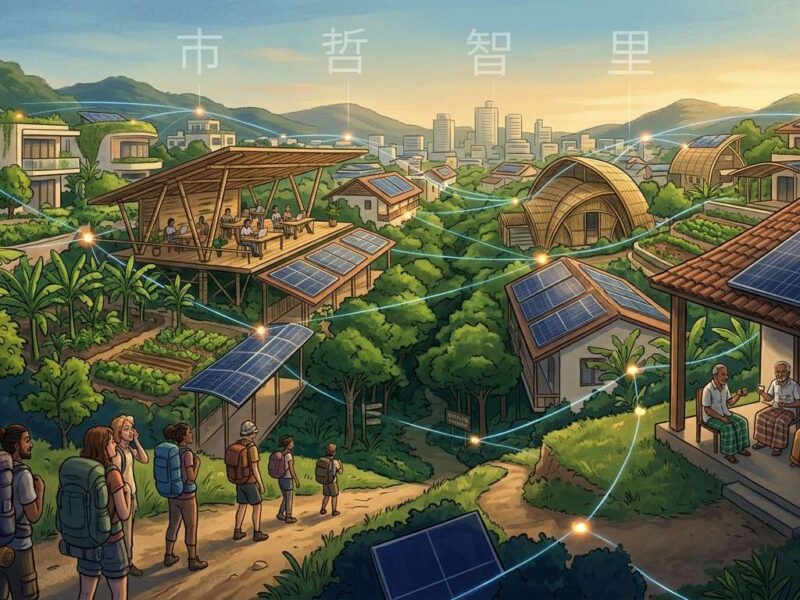
A tree is the best image we have found for how a network of cities can grow without becoming a tangle. It also happens to be a lesson that the cooperative movement learned the hard way.
Why a tree, not a pyramid or a web
A pyramid pushes everything through the top. A pure web has no shared foundation, so every node reinvents the same wheel. A tree does something different. It has one trunk that carries what everyone needs, branches that grow in different directions, and leaves where the actual work happens. If a branch is damaged, the tree survives. If a leaf falls, nothing else changes.
What lives at each level
The practical meaning is that a new city does not start from nothing. It inherits the trunk: the model, the templates and the record of what worked and what did not. It then adds its own branch.
What the cooperative movement learned
The best-known example of growing a network of community-owned businesses is the Mondragon group in the Basque Country, which began with a single worker cooperative and grew into a federation of many. It is the model most often copied by cooperative developers.
Research on that experience offers two cautions worth repeating. First, many efforts to replicate Mondragon have copied some of its features while ignoring others, and have not matched its results. Understanding the model’s critical components matters more than copying its look. Second, there is a real dilemma: to survive, cooperatives need to grow, yet growth can erode the cooperative character that made them valuable. Some of Mondragon’s international expansion has raised exactly that question.
What we take from this. A shared trunk matters, and so does being honest about which parts are essential. For MyCity, the essentials are an open record, community participation and a clear steward. Everything else can vary by city.
How growth is meant to work
The ancient parallel
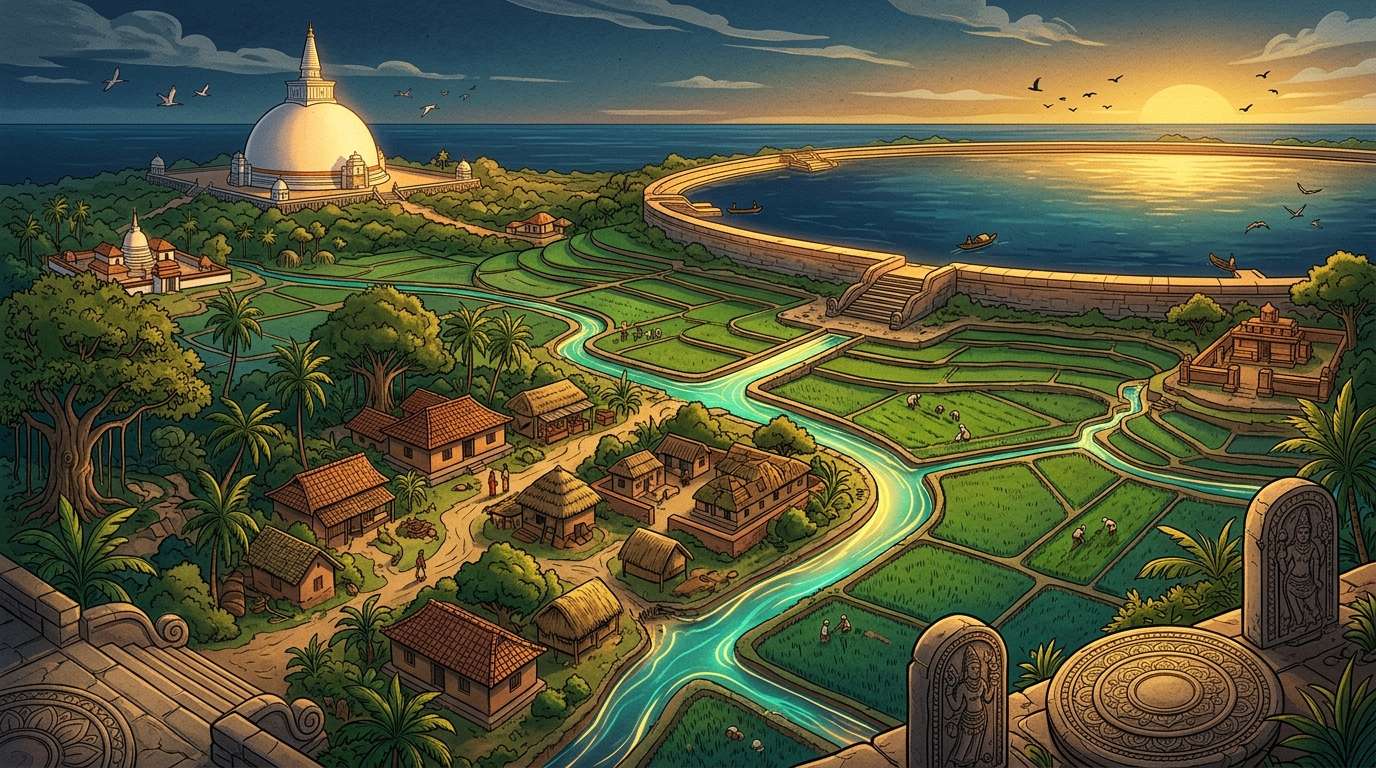
The dry-zone tank cascades work the same way. Each small tank is a leaf. A cascade is a branch. The shared water logic, the idea of passing water downstream in order, is the trunk. That is why the system could grow across a region without a central planner for every tank.
What can go wrong
- A weak trunk. If the shared principles are vague, every branch drifts in its own direction.
- A trunk that smothers. If it dictates too much, branches cannot adapt, and the network becomes bureaucratic.
- Growing faster than the record. Expansion without documentation repeats mistakes.
Key takeaways. The model is a trunk, branches and leaves: shared principles, city-level adaptation and individual pieces of infrastructure. The cooperative experience shows that growth needs a clear core and honesty about what is essential.
Frequently asked questions
What does the trunk, branches and leaves mean?
The trunk is shared principles, tools and the public record. Branches are individual cities. Leaves are the stays, kitchens, workspaces and energy systems each city builds.
Why not just copy a successful model like Mondragon?
Research shows many attempts copied some features and ignored others without matching the results. MyCity focuses on understanding essential components first.
What happens if one city fails?
The shared trunk and other branches continue, and the failure is written into the record so others avoid it.
Sources and further reading
- Principle of intercooperation and growth models (Deusto)
- Institute for Cooperative Development: Mondragon lessons
- FAO GIAHS: Cascaded Tank-Village System
Continue the series
- Previous: What Sri Lanka Already Knew About Building Cities
- Next: The Anchor and the Commons: How Every Plot Is Shared
- All parts of the P2P Pool Guide
- Related: The MyCity Model and Decentralized Ownership Model
Part 3 of 10 in the P2P Pool Guide. This series explains a design. Joining is not open yet, no returns are promised, and nothing here is investment advice.