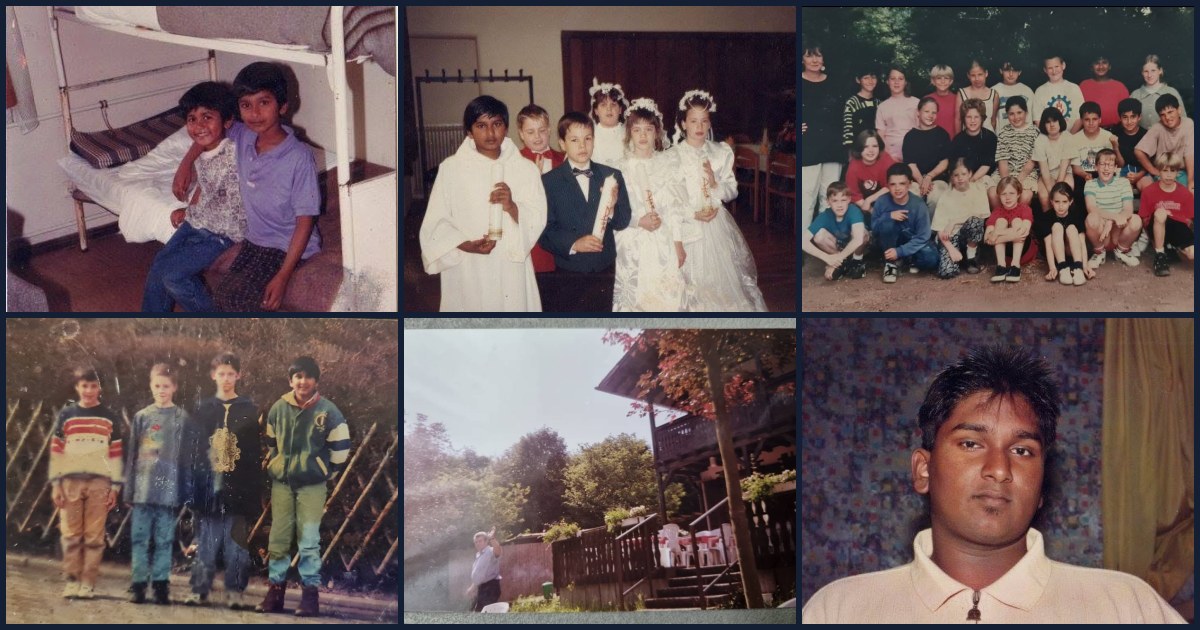
On November 7th, a few minutes before boarding ended on our flight to Sri Lanka, a thought crossed my mind: what if I got off the plane and let my parents fly on without me?
Where do I begin? I could start at the start, but my mind does not work in straight lines. I am neurodivergent, and I cannot always work against my own mind. I have learned to trust it, because the times I fought it, I paid for it. So I will tell this the way it comes.
Deep down, I went to Sri Lanka because I wanted to learn where I come from. I believed it was a visit, and that I would return to Germany afterwards. That was 26 years ago. What I did not know was that I could not simply cross the ocean again.
As a kid you are not aware of immigration policies and laws. I only learned how difficult it was to go back to Germany after I had arrived in Sri Lanka. There were laws in place that stopped me.
“I wanted to stay in Germany, but a part of me wanted to see Sri Lanka.”
Chamara · Before boarding ended, November 7th, 2000
How we ended up leaving
It begins with my parents’ decision to return. I remember the landlord talking to me, and me telling him it was not mine to change. My parents had decided, and that was final.
Sulzbach was my hometown, far more than Sri Lanka ever was. At that age I was more Saarlandish than Sinhalese. It was not even really my parents’ decision alone. Several things pushed us out: my mother’s reasons, and a dispute over 20 perches of land. Twenty perches! If it had been a whole district or a city, I could have understood.
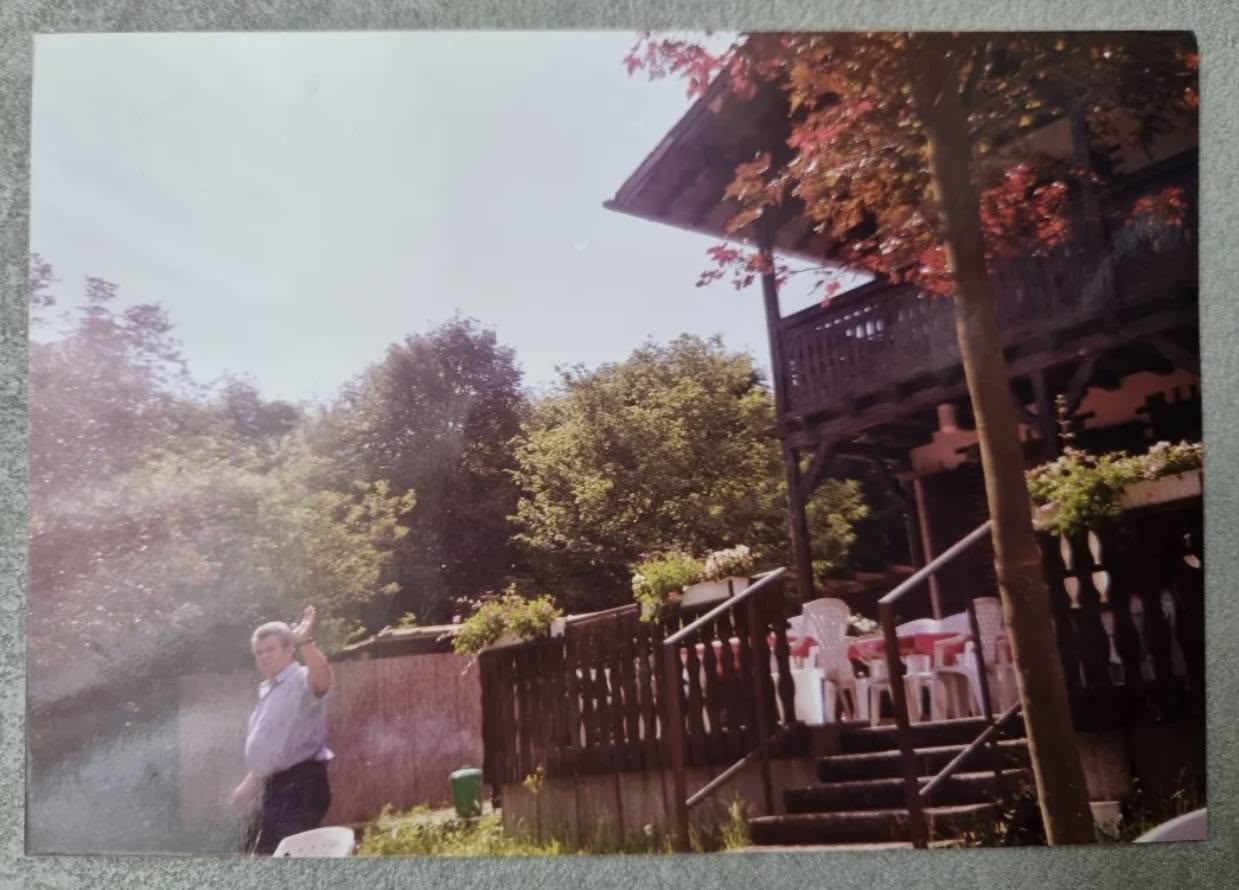
Looking back, I understand why my teacher, Herr Michels, offered to speak to the ministry so that I could stay in Germany until I came of age while my parents and sibling went ahead. It was unheard of for a family that had come to Germany to give that up and return to a developing country.
What it cost my mother
The heaviest reason was my mother. In all our years in Germany she hardly stepped outside, and she would not let us either. Once, as she walked down the road, someone spat in her face. She was humiliated, and afterwards she was afraid to go out alone.
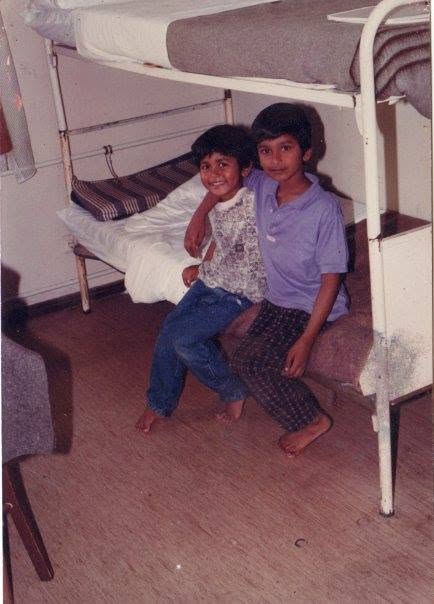
My first day at Altenwald Grundschule
I was seven, and excited to make friends. I sat in class unable to speak or understand a word, so I listened. I picked up the language by ear and the meaning by watching lips.
A boy stood up across the room and walked toward me. I thought he wanted to be my friend. He leaned into my face and spat on me. I could not understand why. What had I done? He did it again. I turned to the teacher, pointing, without a single word to say, and searched her face. I still remember it: she was smiling. She was pleased by what he had done. I tried to spit back, and the whole class laughed.
That was the first incident. Then came the toilets, where older kids broke down the door while others laughed. It frightened me so much that for years I would not use the school bathroom at all. I held it in all day and rushed to our bathroom the moment I stepped through the door.
Melinschule
Moving to Melinschule changed the environment. It felt more welcoming, though the fear and anxiety still came with me.
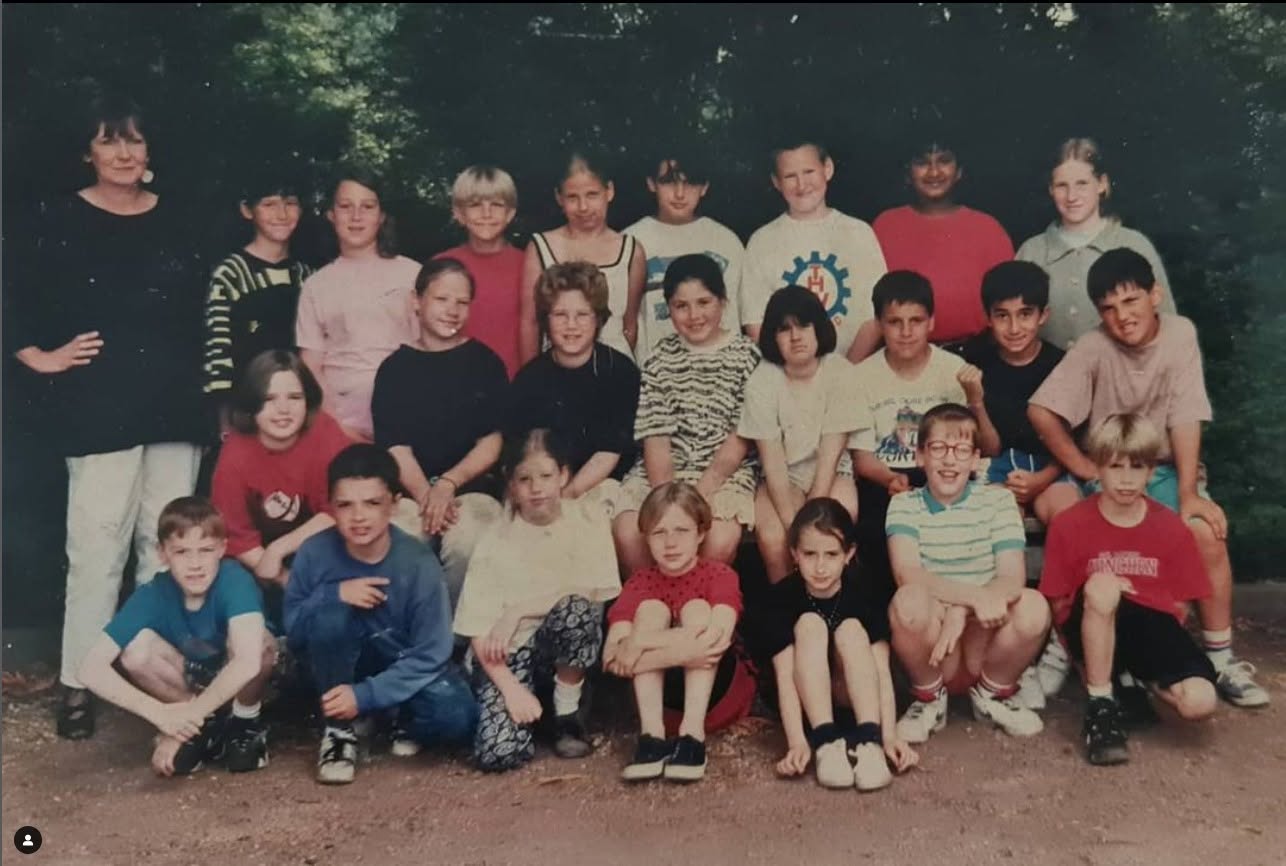
What I lived at Melinschule has stayed with me to this day. There was so much positivity there that it deserves a post of its own, and I will write it.
Learning to read the street
Years of bullying and harassment followed, and years of eye contact I could sense from miles away, heavy with hatred for the colour of my skin. Most people were not like that. The few who were were enough to keep me on guard.
On the walk home, kids would pressure other kids to attack me for no reason. For the first few years I took it: the beatings, the spit, kids waving butterfly knives who called themselves neo-Nazis. I learned to look far down the road and cross the street early to avoid a fight. I learned some of that from the girls in my class. At carnivals my friends would close in around me so that no one would notice me. Sometimes I walked several blocks out of my way to cover a few hundred metres I could have walked in a straight line.
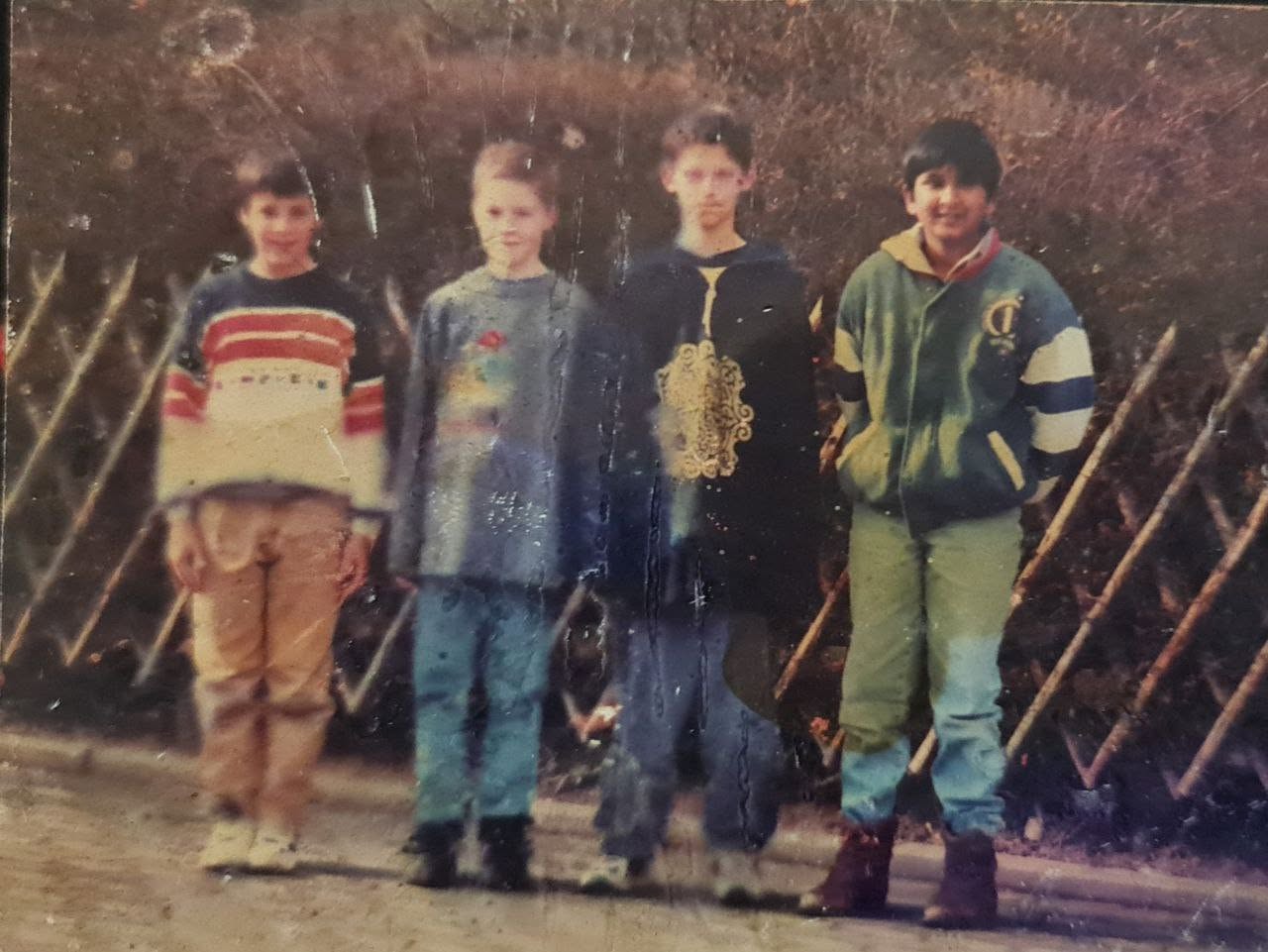
Over those years I began to hate myself, my anxiety grew, and I started to harden. I became more aggressive.
Fighting back
One day my friends and I skipped the school bus and walked instead, through thick snow and forest, which we loved. We arrived about two hours late, and a few kids were waiting for me. I spotted them from far off, and the long stare. One grabbed my hair and smashed my head against the wall.
By then I had learned to switch off my pain at once. I would smile while one eye teared up, unable to hide the hurt, and ask myself silently: what have I done to you? I also had a habit of teaching people by doing to them exactly what they did to me, and then asking: does it hurt? That day I took the boy’s head and smashed it against the wall and asked him, do you think it hurts?
I never talked about days like that. At home I had to invent a story. My mother noticed the bruises and the swollen fingers immediately, and I brushed it off as an accident, because I had learned my parents could not change anything. Complaining to the school got nowhere. The kids would simply wait for me afterwards, or nearby.
So I became very aggressive. We started a fight club at school, so that anyone who wanted to hurt us would know it would cost them. Every lunch break we went behind the gym and punched our knuckles, growing natural knuckle dusters. It seemed pathetic to us that they needed knuckle dusters and butterfly knives. I wanted them to see I was not afraid of those.
Small errands, small joys
Not everything was dark. On weekdays I ran errands to the Lidl nearby, and on weekends my dad went shopping with my mom. I learned to carry the groceries, read the receipt and pay. My mother always told me to save money, and I always spent a little extra, because I was in love with Schokoküsse. I have not tasted one in 26 years.
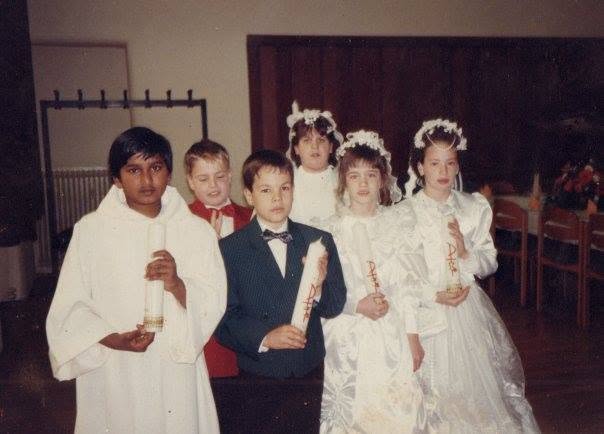
Why I did not stop her
So I understood that my mother’s decision was not only for her own sake but for ours. I did not try to stop her, because she deserved a life too. I remember what she said:
“At least in my own country I can walk wherever I want without being spat on.”
My mother
At that time, I accepted the decision, without knowing what it would really mean.
What it gave me
I will say this plainly: my parents’ decision was not well thought through, and in the end it was we, their children, who paid the price. Returning cost more than I can explain in words, but it is also why I see the world the way I do. I was a kid educated to function in a developed society who suddenly found himself in a developing one. The vision of building a decentralized city infrastructure came from living on both sides, first in the developed world and then back in a developing nation.
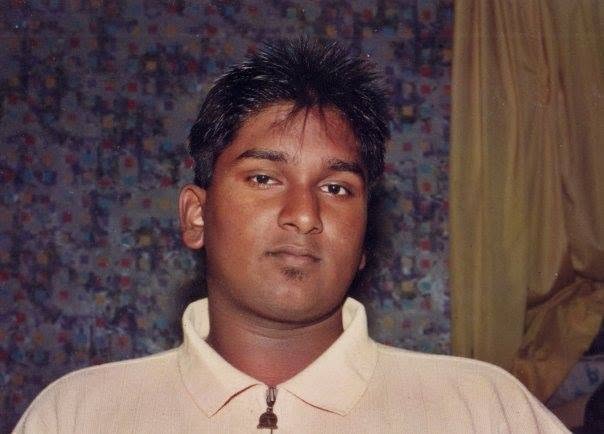
There was so much more to learn and face. Looking back, both the years in Germany and the years in Sri Lanka were years of suffering. I will tell each of them, and what they taught me, in other posts.
Until then, this much: people who think they know me have more to learn. Not even my parents, my sibling or my friends have ever fully known who I am.