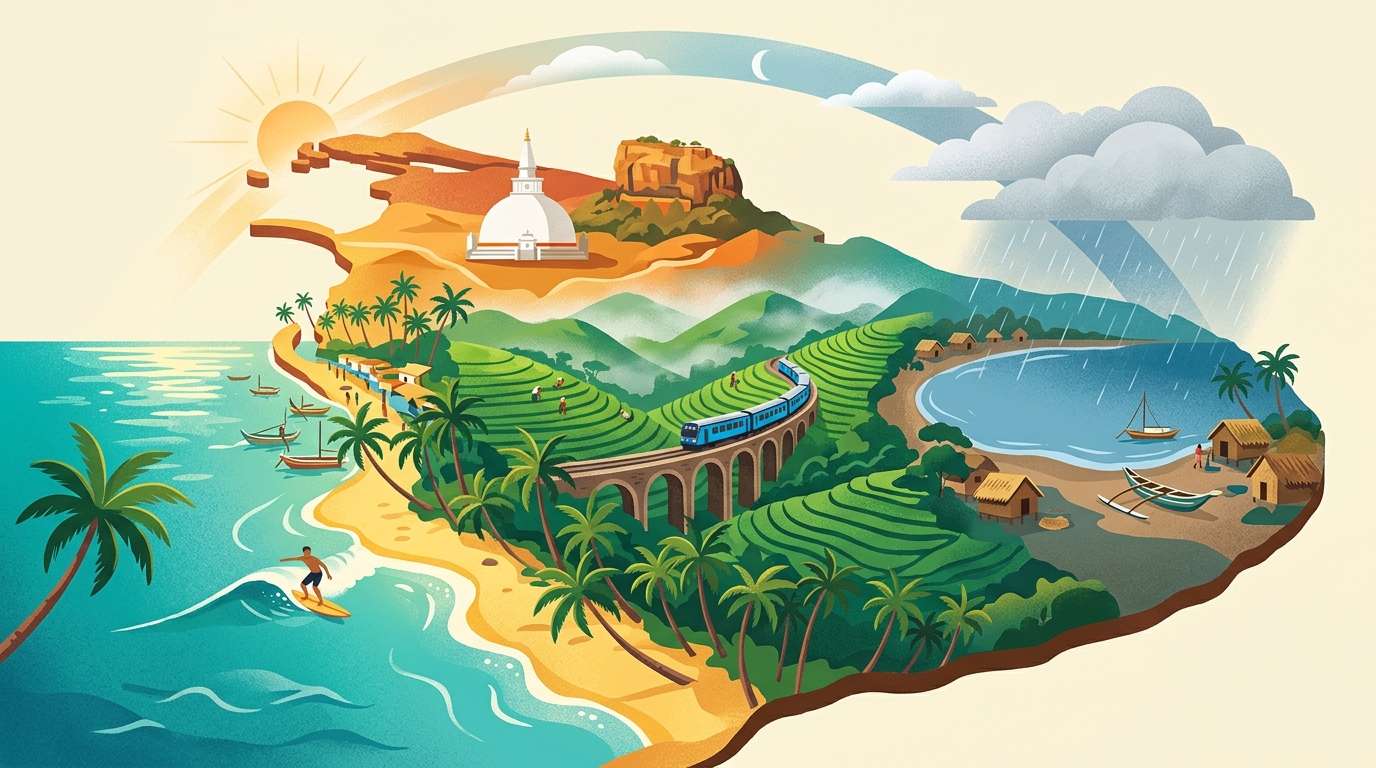
Sri Lanka sits just north of the equator, so it is warm all year. On the coasts and in the Cultural Triangle, daytime temperatures usually sit around 27 to 32°C (81 to 90°F). The hill country is cooler, and Nuwara Eliya can be chilly at night. What changes through the year is rain, and that depends on where you are.
The southwest monsoon brings rain to the west coast, the south coast and the hills from about May to September. The northeast monsoon brings rain to the north and east from about October or November to January. Between them, the inter-monsoon periods bring afternoon storms, with October and November the most unsettled months overall.
// By region
Where to go and when
The Cultural Triangle sits in the dry zone, so it is the most reliable part of the island to visit for most of the year. If your dates fall between May and September, pair Sigiriya and Anuradhapura with Trincomalee or Arugam Bay instead of the south coast.
// Month by month
Sri Lanka through the year
- January. Dry and sunny in the south, west and hills. Peak season, with high prices and busy beaches. Rain lingers in the east early in the month.
- February and March. The best all-round months. Calm seas on the south coast, clear mornings in the hills and good conditions in the Cultural Triangle.
- April. Hot, with afternoon storms starting to build. Sinhala and Tamil New Year falls on 13 and 14 April, when many businesses close for a few days.
- May and June. The southwest monsoon arrives, and the east coast season begins. Vesak and Poson full moon festivals light up temples across the island.
- July and August. Prime time on the east coast and in Arugam Bay. The Kandy Esala Perahera brings huge crowds to Kandy; in 2026 it ran from 18 to 28 August.
- September. Still good in the east and the dry zone. Parts of Yala usually close for the drought.
- October and November. Inter-monsoon storms across much of the island, and the start of the northeast monsoon. The quietest and cheapest time to travel, with lush green landscapes.
- December. The south coast season starts and the Adam's Peak pilgrimage season opens. Christmas and New Year are the most expensive weeks of the year.
// Wildlife, surf and hikes
Seasons for what you want to do
Parts of the hill country railway are still being restored after Cyclone Ditwah. Check our Kandy to Ella train guide for what is running before you plan a route around it.
// Festivals
Festivals worth planning around
- Poya days. Every full moon is a public holiday. Temples fill with worshippers dressed in white, and alcohol sales stop for the day.
- Sinhala and Tamil New Year, 13 and 14 April. Family time, traditional games and sweets. Transport is busy before and after.
- Vesak, the May full moon. Lanterns, light displays and free food stalls, called dansal, across the island.
- Poson, the June full moon. Pilgrims head to Anuradhapura and Mihintale to mark the arrival of Buddhism.
- Kandy Esala Perahera, July or August. Ten nights of processions with drummers, dancers and decorated elephants. Book rooms months ahead.
- Nallur Festival, Jaffna, July to September. A 25-day Hindu festival at the Nallur Kandaswamy temple.
// Prices and crowds
Peak, shoulder and low season
December to March is peak season on the south and west coasts, and prices climb fastest over Christmas and New Year. April and September are good shoulder months. From May to October, the south coast is quieter and noticeably cheaper, which is when many long-stay visitors arrive. For the numbers, see our cost of living guide and our guide to long-term rentals.
Many remote workers follow the weather: the south coast towns of Weligama, Ahangama and Hiriketiya from November to April, then the east coast or the hills for the rest of the year. The Digital Nomad Visa makes a full year possible.
Sri Lanka has a good season somewhere every month of the year.
Choose February or March for the classic island loop, May to September for the east coast, and October or November if you want low prices and green landscapes and do not mind some rain.
// Common questions
Best time to visit Sri Lanka: frequently asked questions
-
What is the best month to visit Sri Lanka?
For a classic trip to the south coast, hill country and Cultural Triangle, February and March are hard to beat, with dry weather across most of the island. If you want the east coast, choose a month between May and September.
-
Is there a bad time to visit Sri Lanka?
Not really, because the two monsoons hit different sides of the island. October and November are the most unsettled months, with heavy storms in many regions, but even then there are dry days and lower prices.
-
When is monsoon season in Sri Lanka?
The southwest monsoon brings rain to the west, south and hill country from about May to September. The northeast monsoon brings rain to the north and east from about October or November to January. October and November also bring inter-monsoon storms across much of the island.
-
When is the best time for whale watching in Sri Lanka?
Off Mirissa on the south coast, the season runs from about November to April, when the sea is calm. Off Trincomalee on the east coast, the best months are roughly May to August.
-
When is the best time to visit Sri Lanka for surfing?
The south coast, including Weligama, Ahangama and Hiriketiya, is best from about November to April. Arugam Bay on the east coast is best from about May to September.