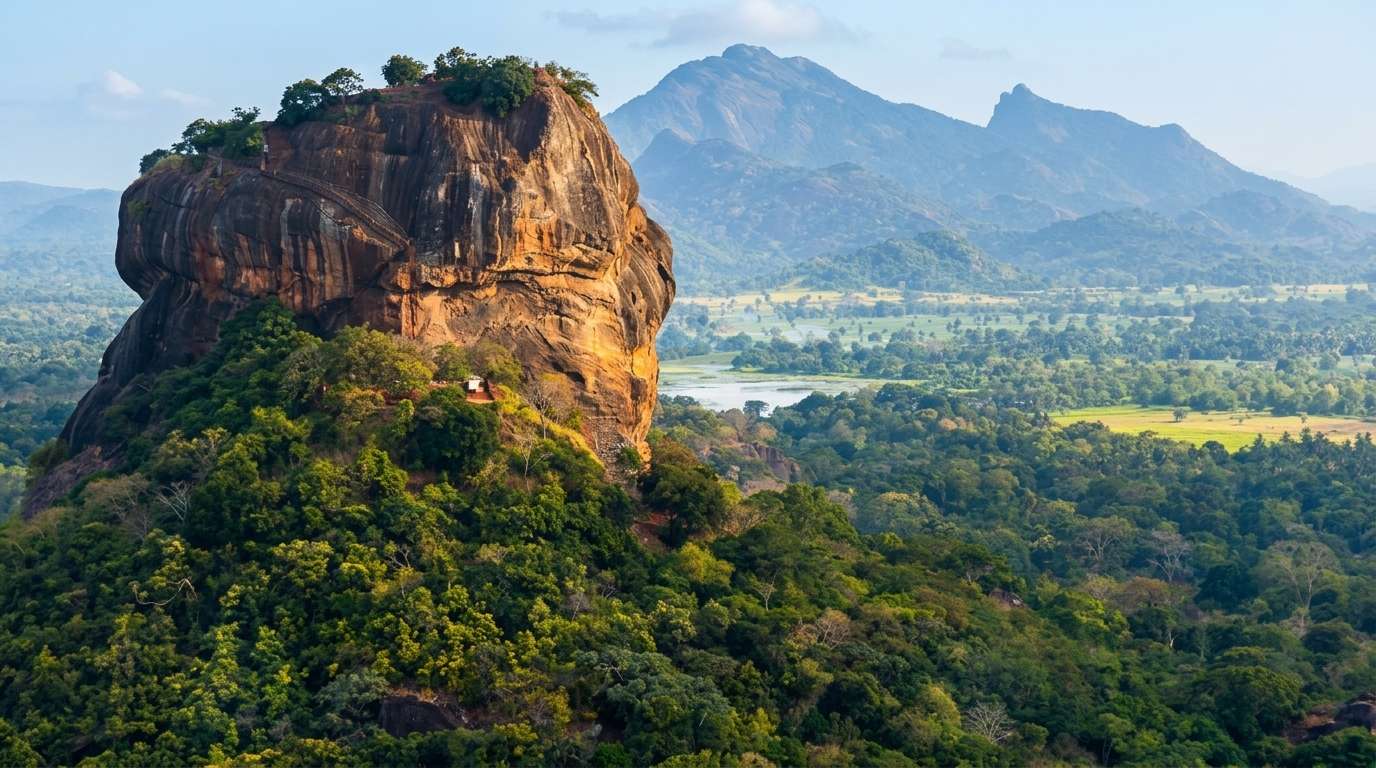
Sigiriya rises almost 200 m straight out of the jungle, a giant column of rock crowned by the ruins of a royal palace. Climbing it, past ancient frescoes and between two enormous stone lion paws, is the defining experience of Sri Lanka’s Cultural Triangle.
The fortress is linked to King Kashyapa, who made it his capital in the 5th century AD. After his reign it became a Buddhist monastery. Today Sigiriya is a UNESCO World Heritage Site, admired as much for its landscaped water gardens and engineering as for the views from the top.
What to see and do
- Walk through the water gardens, laid out symmetrically on the approach to the rock.
- See the frescoes of painted female figures in a sheltered gallery partway up.
- Pass the Mirror Wall, once polished smooth and covered in centuries-old graffiti.
- Climb through the Lion Gate, where the giant paws guard the final ascent.
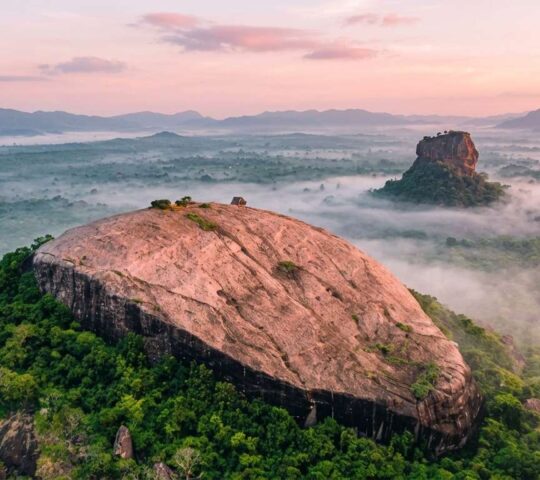
- Explore the summit ruins and take in views across the plains to Pidurangala.
Know before you go
- Time needed: Two to three hours
- Difficulty: Moderate to hard; around 1,200 steps, some on steep metal stairways; not ideal if you are afraid of heights
- Cost: Foreign visitors pay one of the island’s highest entry fees; check the current rate at the ticket office
- Photography: Photography of the frescoes may be restricted; follow posted signs
- What to bring: Water, sun protection and comfortable shoes
Best time to visit
Arrive at opening time to avoid the heat and the tour-bus crowds. The Cultural Triangle is generally driest from about January to April and from June to September.
Getting there
The rock is in the village of Sigiriya, about 20 km from Dambulla. Most visitors arrive by car, tuk-tuk or bus via Dambulla, the region’s transport hub.
Nearby
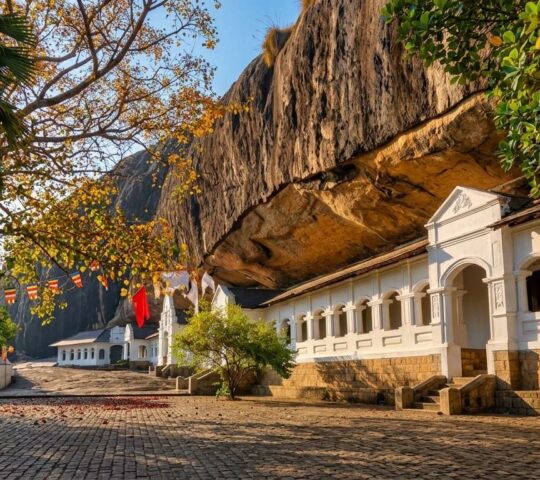
Pidurangala Rock offers the classic view of Sigiriya, and the Dambulla Cave Temple is a short drive away.