
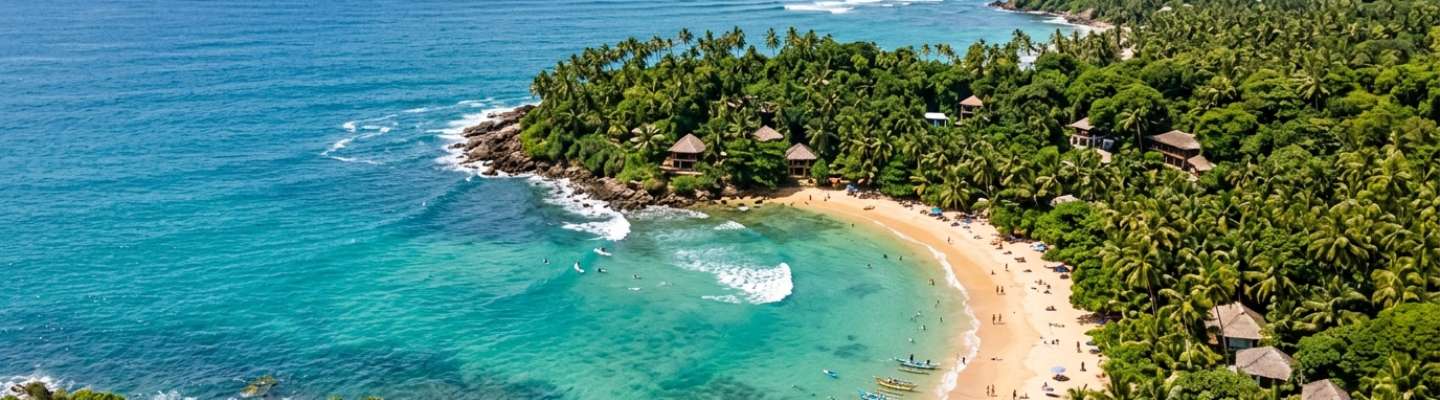
The bay is in Matara District, further east than Weligama and Mirissa. It is a village rather than a town, so you will rely on nearby Dikwella for banks, larger shops and transport.
// Why base here
Why remote workers choose Hiriketiya
- Surf for most levels. The bay has a gentle beach break for learners and a reef break for more experienced surfers.
- Everything is walkable. Cafés, guesthouses and the beach sit within a few minutes of each other.
- Fewer distractions. Quieter evenings make it easier to keep a work routine.
- A close-knit scene. The small size means you see the same faces and get to know people quickly.
// Where to work
Working in Hiriketiya
Hiriketiya has a small but good set of options. Verse Collective combines coliving and coworking near the bay, with ocean views, private pods for calls and a music and podcast studio. Dots Bay House, a lively hostel, has a coworking space that suits lighter work and meeting people. Many remote workers also use a desk at their guesthouse or one of the cafés around the bay, so confirm the internet and backup power at your stay before you arrive.
We are building a verified directory of places to live and work. List your business to be featured, or browse places in Hiriketiya.
// Where to stay
Choosing where to live
Stays range from simple guesthouses to boutique villas on the hillsides around the bay. Places on the hill often have more breeze and better views; places by the beach are closer to the cafés. The bay fills up in peak season, so book early for December to March.
// Getting there
Getting to Hiriketiya
- By road: take the Southern Expressway from Colombo, then continue to Dikwella. A taxi from Colombo takes most of a morning.
- By train: ride the coastal line to Matara, then take a tuk-tuk or bus east to Dikwella and the bay.
- Locally: Mirissa and Weligama are within reach for day trips.
// When to go
Best time to base yourself here
The south coast is at its best from November to April, when the sea is calmer, skies are clearer and most cafés and guesthouses are fully open. From May to September the southwest monsoon brings more rain and bigger, messier surf, and some businesses shorten their hours. Prices for stays usually follow the same pattern: highest in December to March, lower in the wet months.
// Practical notes
Before you commit to a month
Power cuts and slow connections still happen along the coast. Before you commit to a monthly stay, ask for a recent speed test, check whether the place has fiber, and ask what backup power covers the router. A local SIM with a data plan is a sensible backup for calls. For a longer stay, read our Sri Lanka Digital Nomad Visa guide to see whether the visa fits your plans.
Hiriketiya is small by design, and that is the point.
Choose it when you want deep work and a simple routine. Sort out your internet and backup power before you arrive, and the bay does the rest.
// Common questions
Hiriketiya for digital nomads: frequently asked questions
-
Is Hiriketiya good for digital nomads?
Yes, if you want quiet and focus more than nightlife. It is a small, walkable bay with cafés, guesthouses and a couple of coworking spaces, though fewer options than Weligama or Ahangama.
-
Is there coworking in Hiriketiya?
Yes, on a small scale. Verse Collective offers coliving and coworking with private call pods, and Dots Bay House has a coworking space inside the hostel. Many remote workers also work from their guesthouse or cafés, so confirm the internet and backup power at your stay before you arrive.
-
How do I get to Hiriketiya?
Take the Southern Expressway from Colombo and continue to Dikwella, or ride the coastal train to Matara and take a tuk-tuk or bus east to the bay.
-
When is the best time to stay in Hiriketiya?
November to April. The bay is busiest from December to March, so book stays early for those months.