
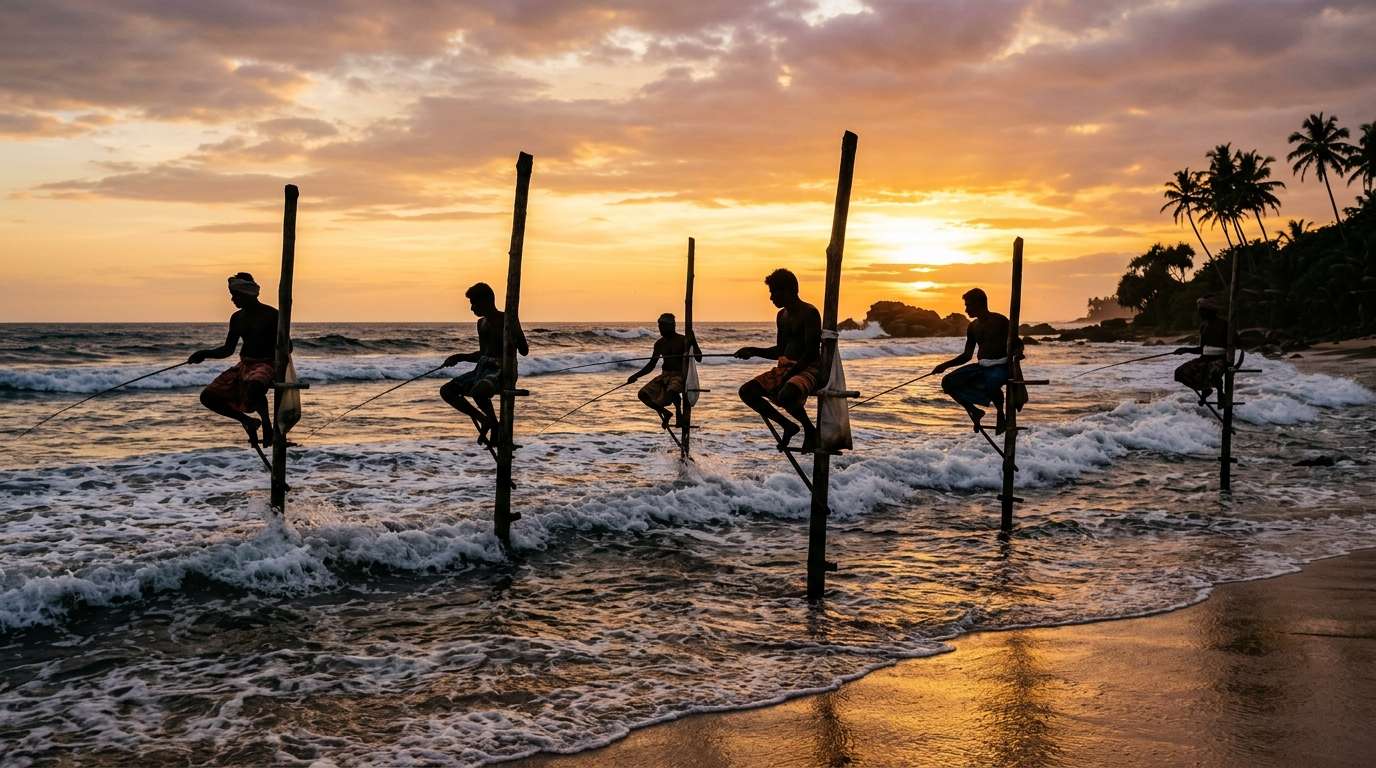
The silhouettes of men perched on wooden poles in the surf, rods in hand, are one of Sri Lanka’s most famous images. Along the stretch of coast between Koggala and Ahangama, stilt fishermen still balance above the waves, especially around sunrise and sunset.
Stilt fishing is often said to have begun around the mid-20th century, when fishermen looked for new ways to reach fish beyond crowded shores. Today it is partly a working tradition and partly a living attraction. Many fishermen at the most accessible spots now pose for photos and ask for a tip.
What to see and do
- Photograph the fishermen at golden hour, when the light is warm and low.
- Look for working fishermen away from the main roadside spots, early in the morning.
- Combine with the south coast towns of Ahangama and Weligama, nearby.
Know before you go
- Time needed: Thirty minutes to an hour
- Access: Roadside beaches along the coastal road
- Cost: No entry fee, but fishermen posing for photos usually expect a tip; agree on it before you shoot
- Etiquette: Ask before photographing people up close and respect their work
Best time to visit
Sunrise and sunset give the classic silhouettes. Conditions vary with the sea; fishermen are more likely to be out in the calmer months from November to April.
Getting there
The fishermen are found along the Galle to Matara coastal road between Koggala and Ahangama. Any bus or tuk-tuk on this road can drop you nearby.
Nearby
Galle Fort is a short drive west, and Weligama Bay a short drive east.